A Collection of Articles and Social Media Posts Written for The Cool Down
Bipartisan group of senators reintroduce measure that could impact thousands of animals: 'Barbaric and has no place in America'
"It is beyond time to end this brutal and dangerous practice."
April 1, 2025
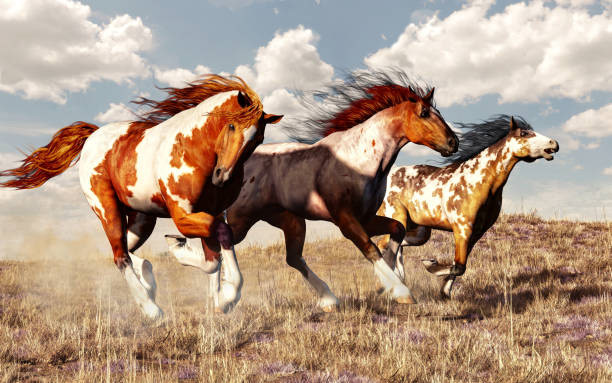
Lawmakers from both major parties collaborated in an effort to rescue America’s horses from slaughter.
Democrats Ben Ray Luján (D-N.M.) and Jan Schakowsky (D-Ill.) joined forces with Republicans Lindsey Graham (R-S.C.) and Reps. Vern Buchanan (R-Fla.) to sponsor the Save America’s Forgotten Equines (SAFE) Act, expanding the Dog and Cat Meat Prohibition Act.
The bill seeks to ban the commercial slaughter of horses and burros and their sale to foreign countries for slaughter. It has extraordinary support across Congress and from animal welfare and equine industry groups.
The SAFE Act would also help people who currently work with or own horses.
“Kill buyers” often outbid horse lovers at auctions, with the intention of selling the horses to other countries where horse slaughter is legal.
“Many owners are so afraid their horses will end up at slaughter that they may even keep them beyond the point that they can afford basic care, causing further suffering,” stated the Animal Welfare Institute.
Wild horses are especially under threat.
The Return to Freedom organization explained that “private livestock grazing and special interests compete for … resources on [public] land, creating constant pressure on the government land management agencies like the Bureau of Land Management (BLM) to remove wild horses from the range.”
The BLM often rounds up and displaces wild horses. To alleviate the large numbers of horses they had in captivity, they offered incentives to people who adopted them. This left an opening for kill buyers.
World Animal News reported that “an in-depth investigation by American Wild Horse Conservation (AWHC) … uncovered rampant fraud and abuse, revealing that many adopted horses were being sent to slaughter for profit.”
The SAFE Act might mitigate this particular loophole.
Saving horses from this violent death helps conserve rare wild species, said Return to Freedom, which offers sanctuary to wild horses and seeks to educate the public about conservation.
The SAFE Act is one step towards ending this killing.
Another way people can help horses and burros is by lessening their beef consumption, which would reduce not only planet-warming gas pollution but also the need to use land for livestock, restoring the wild horses’ habitat.
“The slaughter of horses for human consumption is barbaric and has no place in America,” Buchanan said.
Schakowsky added, “It is beyond time to end this brutal and dangerous practice. Horses are not food.”
Researchers make surprising discovery about beavers' impact on other wildlife: 'Incredible ability'
This is heartening news.
March 14, 2025
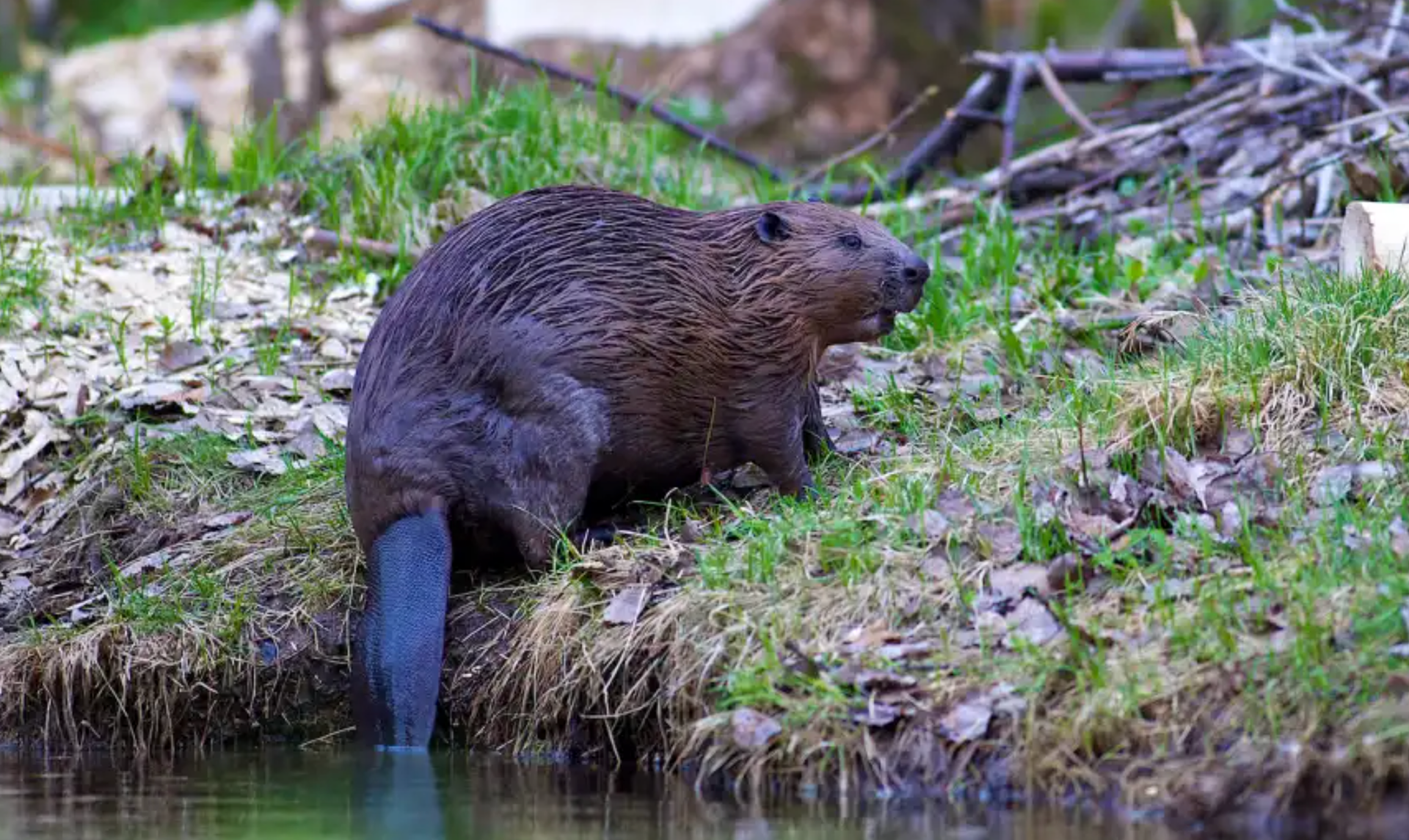
As beaver populations increase in an ecosystem and they begin to redesign their habitats, there is an encouraging corresponding influx of bat activity, new research shows.
This is in large part due to beavers' propensity to reshape their environment. As they build dams and redirect freshwater, they effectively reinvigorate ecosystems. Ecologi explained that beavers have an "incredible ability to create new wetlands."
After being hunted nearly to extinction in the U.K., beavers are now being systematically reintroduced to wetlands, and the outcome has been astounding. Releasing beavers back into their wetland homes will alleviate flooding, improve water quality, and boost biodiversity.
Researchers at UWE Bristol studied bat activity in areas where beavers have been reintroduced as opposed to areas with no beavers — and found that bat activity is as much as 393% higher in the wetlands where beavers live.
This is heartening news at a time when researchers say that a quarter of freshwater species are facing extinction because of the destruction of their habitats.
Bats are amazingly effective at pest control, with the ability to eat thousands of insects per night. While it's not proven that they sustain these hourly rates, their nightly hunts still help control insect populations — particularly mosquitoes, which can spread disease.
Tim Carter, a bat expert and associate professor of biology at Ball State University in Muncie, Indiana, told Alabama's AL.com: "A lot of people will tell you bats eat probably about half their body weight in insects a night, so that's a substantial amount. That's one way to think about it."
Bats are one of nature's most important pollinators, too. According to the U.S. Fish and Wildlife Service, "While many bats eat insects, others feed on nectar and provide critical pollination for a variety of plants like peaches, cloves, bananas and agaves."
Dr. Paul Lintott, who headed the UWE Bristol study, explained: "The full importance of beavers to our landscapes has only recently begun to be understood … we are now seeing that beavers can help other wildlife thrive, including protected species such as bats.
"As beaver-modified rivers become more widespread across the U.K., it is exciting to know that they will be creating valuable habitats for many other native and endangered wildlife species," he continued.
29 eggs hatched at zoo could save species from extinction: 'Incredibly important responsibility'
"A triumphant milestone."
March 8, 2025
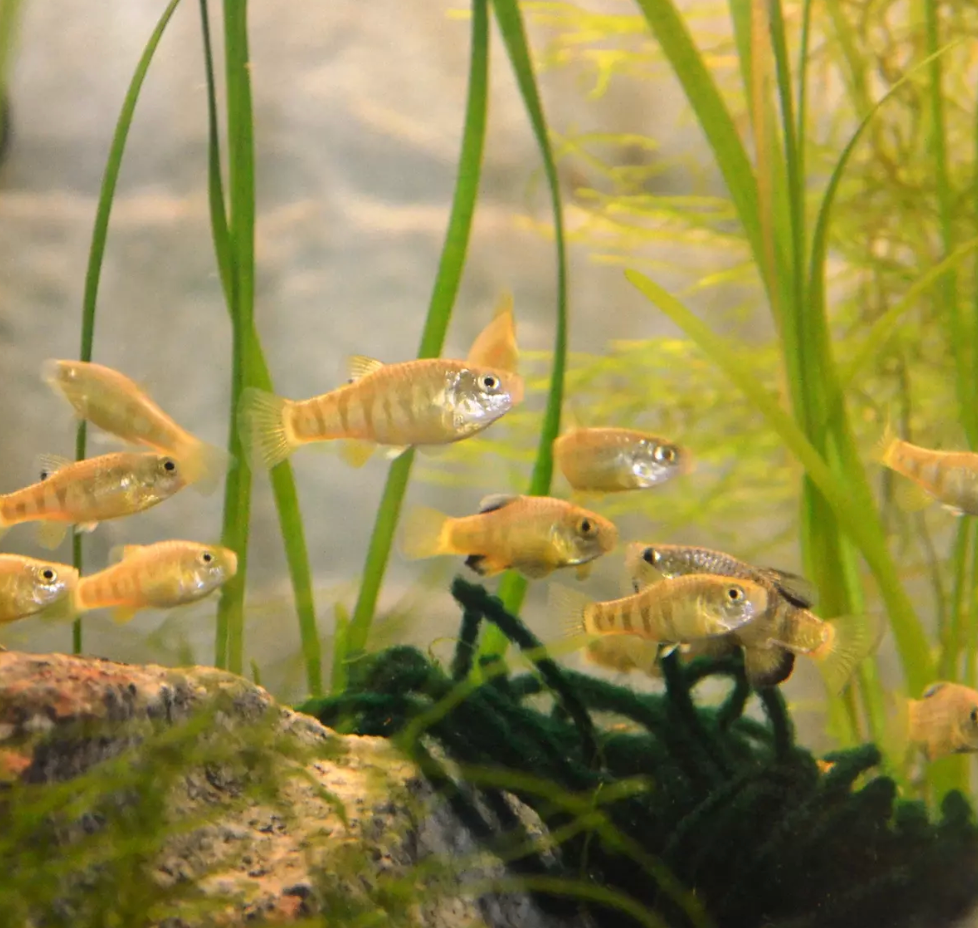
A rare species of fish that has not been observed in its natural habitat in over two years has successfully hatched at the Bristol Zoological Society in England, according to the BBC.
As recently as November, the Whipsnade Zoo in Bedfordshire learned the startling fact that they might have the last remaining boxer pupfish, native to Lake Chichancanab in Mexico, on the planet. Just before Christmas, 50 precious Cyprinodon simus eggs were delivered from the zoo, the only place with a known reserve of the species, to the Bristol Zoological Society.
Then, the delicate process of readying them for hatching in pots of water began. And now, as the BBC reported, over 29 of the eggs have hatched.
It's thought that one of the reasons for the dwindling number of boxer pupfish in Lake Chichancanab is the introduction of the Mayan cichlid and other invasive fish species. But now, the boxer pupfish may have a new lease on life, thanks to the Bristol Zoological Society's commitment and effort.
"When a species no longer exists in the wild, its future relies completely on conservation zoos," Alex Cliffe, the Whipsnade Zoo's assistant curator of fish, said in a November press release announcing the plan to save the fish. "At Whipsnade, we now have the incredibly important responsibility of preventing this tiny fish from slipping into extinction — a responsibility we take very seriously."
Even though they're only a few weeks old and a few centimeters long, the baby fish seem to be prospering, the BBC reported.
"This really is a triumphant milestone in freshwater fish conservation," said Tamara Canalejas, of the Bristol Zoological Society.
The zoological society's director of conservation and science, Brian Zimmerman, told the BBC, "By strengthening the numbers of the boxer pupfish across more than one institution, we will ensure that the species survives, even if it is lost in the wild."
The BBC said the society plans to travel to Mexico to work with the community to search for traces of the boxer pupfish and reintroduce the species. They've done work like this before, boosting numbers of species, such as Partula snails and Desertas Island land snails.
In his press release, Cliffe added, "Thanks to the unique conservation expertise and agility of zoos and aquariums, we can reverse the damage caused and restore the species in our care."
Town outraged after off-road drivers engage in 'deliberate' and senseless act: 'This is so disturbing'
March 4, 2025
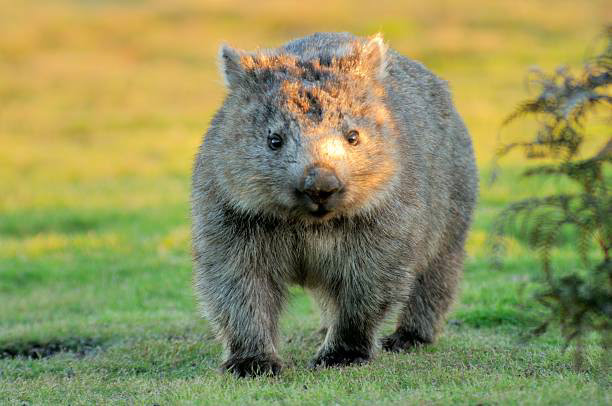
A close-knit community in Australia is mourning the seemingly intentional killings of 10 wombats.
The Victorian town of Venus Bay is reeling after discovering 10 wombats were mowed down by what appears to be three four-wheel drive vehicles. Police are searching for the vehicles and their drivers, who were witnessed nearby, Yahoo News reported .
An especially troubling fact is the care and love this community shows for its wildlife.
Neighbors put up bright yellow signs with such phrases as "they just wanted to get home too" and "our local wildlife is dying for you to slow down" posted throughout the town, imploring drivers to operate their vehicles with caution and watch for wombats as well as other animals. There were also some kangaroos and a koala found struck nearby, according to Yahoo News.
Police have called it a "deliberate destruction of wildlife."
Unlike other cases of animal deaths that have been caused by environmental factors, such as heat waves , this destruction of life looks to have been purposeful.
Police are asking anyone with information or dashcam footage to contact them. Local laws are strict concerning protected species, and according to the Wildlife Act of 1975 , people found guilty of killing these species face a hefty fine or six months in prison for each animal killed.
As One Earth notes , wombats play an essential role in the local ecosystem, including helping to create habitats for other species and preventing soil erosion with their burrows.
As reported in the Townsville Bulletin on a local Facebook page, one commenter wrote: "This is so disturbing for our beautiful town to lose so many wombats in one night."
Local Mark Radley told the Australian publication The Age that "it's just a feeling of utter devastation."
And yet, on the Tarwin Lower/Venus Bay Community Voice Facebook page, someone sounded a hopeful note, saying: "Kudos to the residents who have positioned [signs] at various places. Shows there are some caring people around."
Another asked a sensible question: "Is there anything we could do to minimize it from happening again?"
The community is banding together to try to find the people responsible for these animals' deaths, prevent more unnecessary loss of animal life, and attempt to educate the public about the importance of the civic responsibility human beings owe to the other beings that share our Earth.